
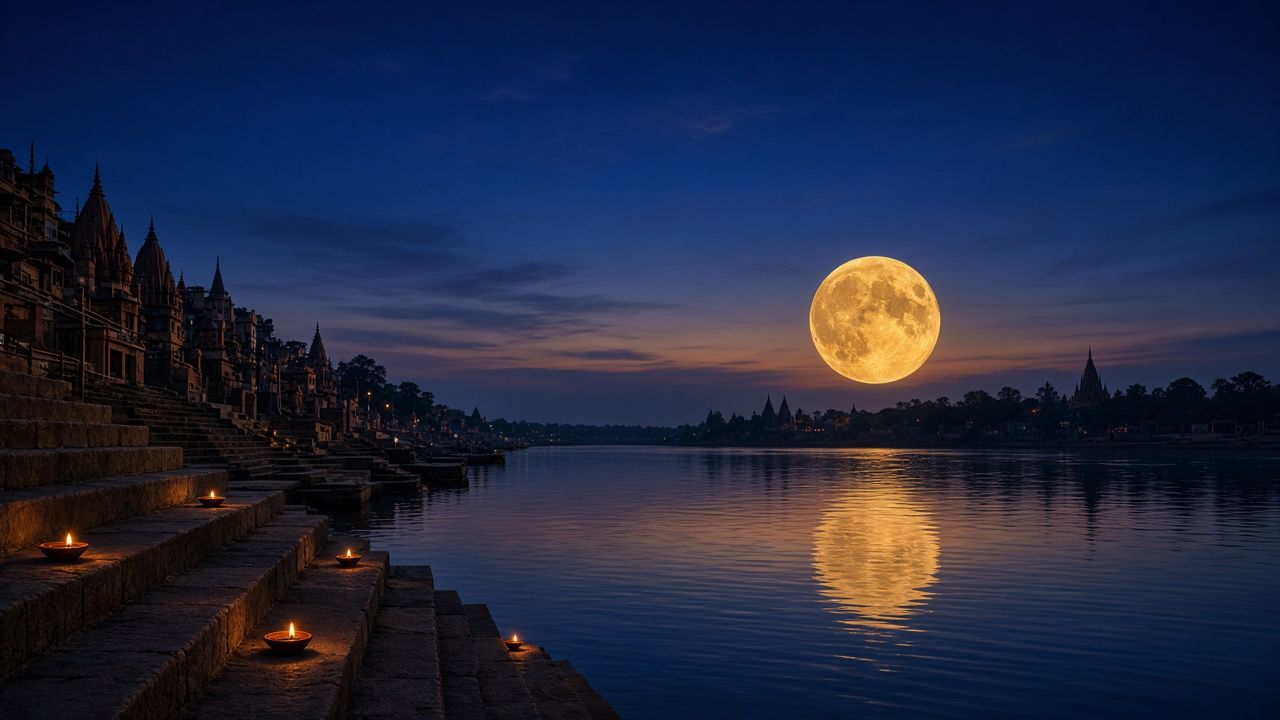
The full moons of the year
Every full moon has a name
Purnima is the full-moon day of the Hindu lunar month. Purnimas follows all twelve of them: what each one celebrates, how the lunar calendar counts them and how to watch the moon itself.
Meet the twelve PurnimasA month counted in thirty tithis
A lunar month has thirty tithis, lunar days defined by how far the moon has moved ahead of the sun. Fifteen belong to the bright half, Shukla paksha, ending at Purnima. Fifteen belong to the dark half, Krishna paksha, ending at Amavasya, the new moon.
Slide through the month to see how each tithi looks.
Purnima Shukla paksha, the bright half · about 100% lit
Twelve months, twelve Purnimas
Each lunar month ends, or peaks, at its full moon, and almost every one is tied to a festival or observance somewhere in South Asia.
- ChaitraHanuman Jayanti in much of North India
- VaishakhaBuddha Purnima, the birth, awakening and passing of the Buddha
- JyeshthaVat Purnima and the Snana Yatra bathing festival at Puri
- AshadhaGuru Purnima, a day to honour teachers
- ShravanaRaksha Bandhan, and Narali Purnima on the western coast
- BhadrapadaThe full moon before Pitru Paksha, the fortnight for ancestors
- AshvinSharad Purnima, or Kojagiri, with kheer left in the moonlight
- KartikaDev Deepawali at Varanasi and Guru Nanak Jayanti
- MargashirshaDattatreya Jayanti
- PaushaPaush Purnima river bathing and Shakambhari Purnima
- MaghaMagh Purnima bathing and Guru Ravidas Jayanti
- PhalgunaHolika Dahan on the eve of Holi, and Dol Purnima in Bengal
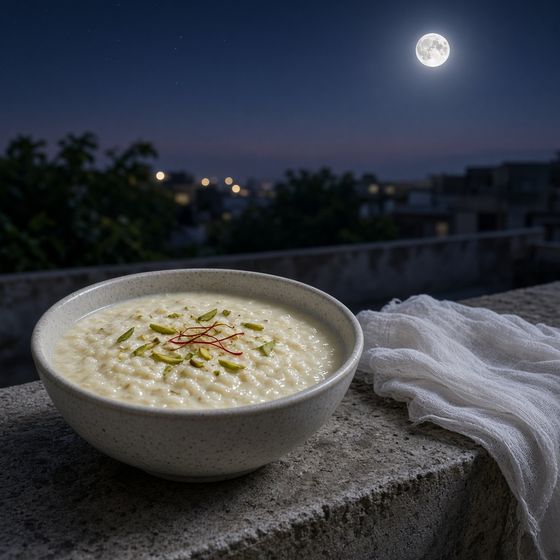
One full moon up close
Sharad Purnima and the bowl of kheer
The full moon of Ashvin, at the end of the monsoon, is often called the brightest of the year in popular tradition. In many homes a bowl of kheer, rice cooked slowly in milk with sugar, is set out in the moonlight and eaten the next morning.
In Maharashtra the night is Kojagiri Purnima, from ko jagarti, “who is awake?”, and families stay up late with spiced milk and games.
More full-moon festivalsTwo ways to end a month
Purnimanta
The month ends at the full moon. Common across much of North India. The dark fortnight comes first, then the bright one.
Amanta
The month ends at the new moon. Common in much of South and West India. The bright fortnight comes first, ending at Purnima mid-month.
Both systems agree on when Purnima falls. They only disagree on which month’s name the following fortnight carries.
Look up
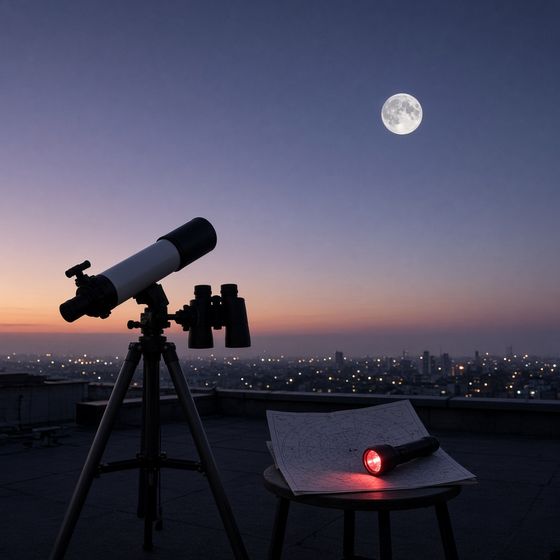
Watching the full moon
- A full moon rises in the east around sunset and sets around sunrise.
- Moonrise is the best moment for photos: the moon sits low beside buildings and trees, and looks warm and large.
- Binoculars show maria, craters and bright rays; a small telescope shows mountain shadows near the edge.
- For a sharp photo of the bright disc, try the Looney 11 rule: aperture f/11 and shutter speed 1/ISO.
The moon in four numbers
- 29.53
- days in an average synodic month, from one full moon to the next
- ~11
- days earlier each solar year that the same Purnima falls, until a leap month resets it
- ~32.5
- months between Adhik Maas leap months, which keep festivals in their seasons
- 14%
- how much larger a full moon at its closest can look than one at its farthest
Quick answers
Why does a Purnima sometimes fall on a different day than the full moon in my calendar app?
Purnima follows the tithi in force, usually at sunrise, in a given place. The exact astronomical full moon can fall late at night or early in the morning, so local calendars may mark the day before or after.
What is a blue moon?
Most often today it means the second full moon in one calendar month. The older meaning is the third full moon in a season that has four. Neither is actually blue.
Do lunar eclipses happen at full moon?
Yes, only at full moon, when the sun, Earth and moon line up closely enough for the moon to pass through Earth’s shadow.
Is this an astrology site?
No. Purnimas covers calendar, culture and astronomy. It does not offer horoscopes, predictions or remedies.
When is the next full moon?
See the full moons of the coming year, with times in Indian Standard Time.
Full-moon calendar